
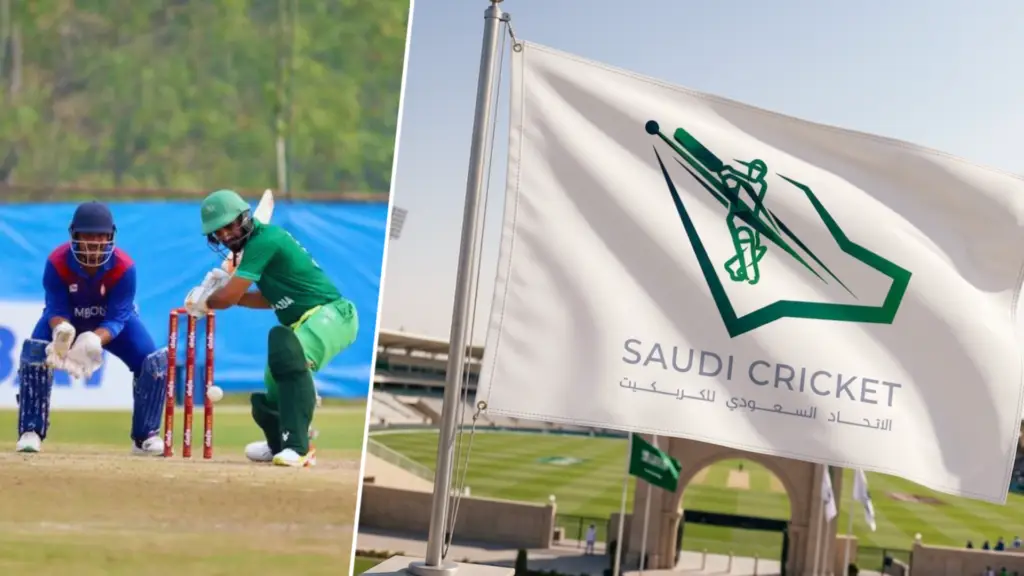
When the Saudi Arabian Cricket Federation awarded South Asian Network Limited the rights to establish the Kingdom’s first professional T20 cricket competition in October 2025, it marked the culmination of years of careful, deliberate positioning. The Dunes T20 League, scheduled to launch in October 2026 in Taif near Jeddah, is far more than a sporting event. It is a commercial statement, a cultural project, and the next chapter in Saudi Arabia’s systematic campaign to become one of the world’s premier sports destinations.
For a country that has already upended boxing, golf, and football, cricket represents a different kind of opportunity: a sport with a billion-strong global fanbase, a colossal South Asian diaspora living within the Kingdom’s borders, and an emerging domestic base hungry for organised competition. The question now is not whether Saudi Arabia will make its mark on cricket, but how deep and durable that mark will be.
A Nation Ready for Cricket
Cricket has deep, if largely informal, roots in Saudi Arabia. The sport was first documented in the Kingdom as early as 1960, when Indian and Pakistani expatriates gathered for a friendly match during Eid celebrations in Jeddah. By the mid-1970s, structured club cricket had taken hold, with the Jeddah Cricket League among the earliest formal competitions. The sport remained, for decades, the preserve of the expatriate working class from the Indian subcontinent.
That context is critical to understanding the commercial logic of the Dunes T20 League. Saudi Arabia is home to approximately eight million people from South Asian countries where cricket is the dominant sporting religion, including India, Pakistan, Bangladesh, Sri Lanka, and Afghanistan. This population does not merely follow the sport passively. It forms a natural, ready-made audience that has long craved professional cricket on home soil. As the Saudi Arabian Cricket Federation’s chairman, Prince Saud bin Mishal Al-Saud, has stated, improving the quality of life for this expatriate community is one of the federation’s primary objectives.
The organised cricket infrastructure has grown considerably in recent years. As of 2025, the SACF counts over 7,200 registered players and 9,000 junior cricketers across 370 clubs. Saudi Arabia’s men’s national team holds the 32nd position in the ICC’s T20 international rankings, a modest but real footing on the global stage. The federation, formally established in 2020 under the Saudi Arabian Olympic Committee and the Ministry of Sports, has since been the driving force behind consolidating this grassroots foundation into something with serious professional ambitions.
The League's Architecture and Commercial Structure
The Dunes T20 League will feature six franchise teams competing at the Taif Cricket Ground, a 4,000-capacity venue near Jeddah, in the second week of October 2026. The tournament follows a round-robin league format leading into playoffs, broadly mirroring the structure of established competitions in the Gulf and beyond.
The league has been constructed through a three-way partnership between South Asian Network Limited, Unique Sports Group, and Prolithic Talent Agency. The involvement of these two talent agencies is commercially significant. Unique Sports Group represents players including England fast bowler Jofra Archer, while Prolithic, mentored by Indian cricket legend Yuvraj Singh, manages the likes of India batter Abhishek Sharma. Singh has been appointed as the league’s official ambassador, lending a recognisable face to the competition’s promotional efforts and providing a direct connection to the vast Indian cricket audience.
Player salaries for the inaugural edition are expected to reach up to USD 100,000 at the top end, a meaningful sum that signals intent to attract credible cricketing talent. The player recruitment model is designed to stay within ICC regulatory boundaries. The league will cap the number of active Full-Member international players per team at a maximum of four from the past two years, a structure that removes the requirement for ICC approval while still allowing for competitively attractive rosters. The majority of playing slots are expected to be filled by recently retired internationals who remain active on the global franchise circuit, alongside emerging and established Saudi domestic players.
Vision 2030 and the Economics of Sport
The Dunes T20 League does not exist in isolation. It is a direct product of Saudi Arabia’s Vision 2030, Crown Prince Mohammed bin Salman’s wide-ranging blueprint for economic transformation. Sport is a cornerstone of that agenda, serving as a vehicle for economic diversification, tourism development, quality of life improvement, and global brand elevation.
The SACF has been explicit about the league’s alignment with these national goals. Its stated objectives include developing and empowering Saudi players through professional training and exposure, encouraging private-sector investment to build a sustainable cricket ecosystem, hosting matches across Saudi cities to boost sports tourism and community engagement, and diversifying cricket’s revenue streams while expanding the game’s national footprint.
The multi-city ambition is particularly notable from an economic standpoint. By spreading matches across different urban centres rather than concentrating everything in one venue, the organisers intend to stimulate hotel bookings, local transportation, hospitality spending, and commercial activity in host communities. This echoes the approach taken by leagues in the UAE, where the International League T20 has generated measurable economic activity across Abu Dhabi, Dubai, and Sharjah.
Saudi Arabia’s sports economy is already substantial by regional standards. The Kingdom has aggressively attracted Formula 1, heavyweight boxing, golf’s LIV series, and top football talent to its Pro League. In cricket specifically, Saudi Arabia hosted the IPL player auction in 2024, a globally watched event that brought significant media attention and commercial interest to the country. These investments collectively reinforce a network effect: each new sporting property adds legitimacy to the next.
The Dunes T20 League notably operates without direct involvement from Saudi Arabia’s Public Investment Fund, which is currently restructuring some of its overseas sporting commitments. This suggests the league must demonstrate commercial sustainability through its own revenue streams, including ticket sales, broadcast deals, sponsorship, and franchise fees, rather than relying on sovereign wealth as a backstop. That independence, while raising the commercial bar, also gives the league a degree of structural credibility that state-funded projects sometimes lack.
The Sponsorship Ecosystem
No discussion of Saudi cricket’s commercial landscape is complete without examining Aramco. The state-owned oil giant has become one of cricket’s most prominent global sponsors, holding a multi-year partnership with the ICC that was extended in 2024 and includes naming rights for match awards at World Cups. Aramco has also been a visible sponsor of the IPL, with Visit Saudi, the Kingdom’s state tourism body, and Neom, the futuristic coastal city project, similarly maintaining prominent branding in Indian Premier League coverage.
The Dunes T20 League does not yet have publicly confirmed headline sponsors beyond its founding partnership structure, and securing broadcast rights will be central to its commercial viability. The league’s access to Unique Sports Group and Prolithic’s networks could prove useful in attracting international sponsors who already follow their client cricketers across multiple competitions. As the league targets a global audience, the appeal to brands seeking access to the enormous South Asian diaspora market will be significant.
Building a Gulf Cricket Ecosystem
The Dunes T20 League arrives at a moment when cricket’s geography in the Gulf is being actively redrawn. The UAE’s International League T20, now entering its fifth season in late 2026, has established a functioning regional template for franchise cricket, attracting global stars and generating respectable broadcast audiences. Crucially, the ILT20 and the SACF have already formalised a partnership under which ILT20 matches could be staged in Saudi Arabia in future seasons, and each ILT20 franchise is required to sign at least one Saudi player. A development tournament specifically aimed at producing Saudi talent for the main event is also planned.
Rather than competing directly with the ILT20, the Dunes T20 League occupies a different scheduling window in October, reducing the risk of franchise overlap and player availability conflicts. This complementary positioning could eventually allow the two leagues to operate as mutually reinforcing components of a broader Gulf cricket circuit, potentially drawing in Pakistan Super League interest as well. The Pakistan Cricket Board has reportedly submitted formal expressions of interest to the SACF regarding the construction of a cricket stadium in Jeddah, a development that would dramatically upgrade the Kingdom’s capacity to host high-level international matches.
The Player Pathway and Local Development
Perhaps the most consequential long-term element of the Dunes T20 League is what it could mean for Saudi domestic cricket. The SACF has made developing local talent a non-negotiable component of the league’s mandate, not merely an aspirational footnote. The intention is to place Saudi players alongside professional international cricketers on a regular competitive stage, accelerating their development far beyond what domestic club cricket can offer.
For local players, the Dunes T20 represents an entirely new career horizon. Saudi cricketers have historically competed in regional tournaments with limited exposure to elite-level opponents. Training and playing alongside the calibre of professionals that the franchise model attracts will compress the development timeline, building match awareness, technical refinement, and media-facing experience that cannot be replicated in club settings. The federation’s longer-term goal is to field a competitive national team at the ICC level, and the Dunes T20 is the most powerful accelerant available to that project.
Challenges and the Road Ahead
The Dunes T20 League launches into a global T20 market that is already crowded with competing properties. The ILT20, SA20, the Big Bash, the Hundred, the Caribbean Premier League, and a growing list of associate nation leagues all compete for the same pool of available international talent. Scheduling windows are tighter than ever, and securing consistent player participation will require persuasive contracts and careful diplomatic management with national boards.
The venue capacity at the Taif Cricket Ground, currently standing at around 4,000 seats, is modest by the standards of established franchise leagues. Attendances will need to be robust to justify expansion, and creating an atmosphere competitive enough to attract broadcasters will require organisers to fill those seats consistently. This is where the South Asian diaspora audience becomes not just a commercial asset but an operational necessity. Getting those eight million cricket-loving residents to attend matches, rather than watching from home, will determine whether the Dunes T20 generates the kind of atmosphere that translates into broadcast appeal.
Conclusion
The Dunes T20 League represents the most direct and commercially structured attempt yet to bring professional cricket to Saudi soil. Its significance lies not merely in the matches it will stage, but in what those matches signal: that the world’s second most-watched sport has found a new frontier, and that frontier intends to be taken seriously.
The league sits at the intersection of three powerful forces. There is a vast, underserved audience of South Asian expatriates who have waited decades for cricket of this quality close to home. There is the machinery of Vision 2030, which has already demonstrated a willingness to invest significantly in sport as an engine of economic diversification and national reputation building. And there is a global cricket industry hungry for new markets and revenue pools at a time when the sport’s traditional commercial centres face saturation.
Whether the Dunes T20 League becomes a durable pillar of global franchise cricket or a well-funded first chapter that requires years of refinement will depend on execution. Broadcast deals, sponsor commitments, player quality, stadium atmosphere, and genuine investment in Saudi domestic talent will all be scrutinised. The franchise model has worked in the UAE, South Africa, and the Caribbean because it balanced entertainment value with commercial discipline and long-term vision.
Saudi Arabia has shown it can build world-class sporting events when it commits to a goal. Cricket is next in line, and October 2026 in Taif will be the first real test of whether the Dunes T20 can deliver on the ambition its founders have staked their reputations on.