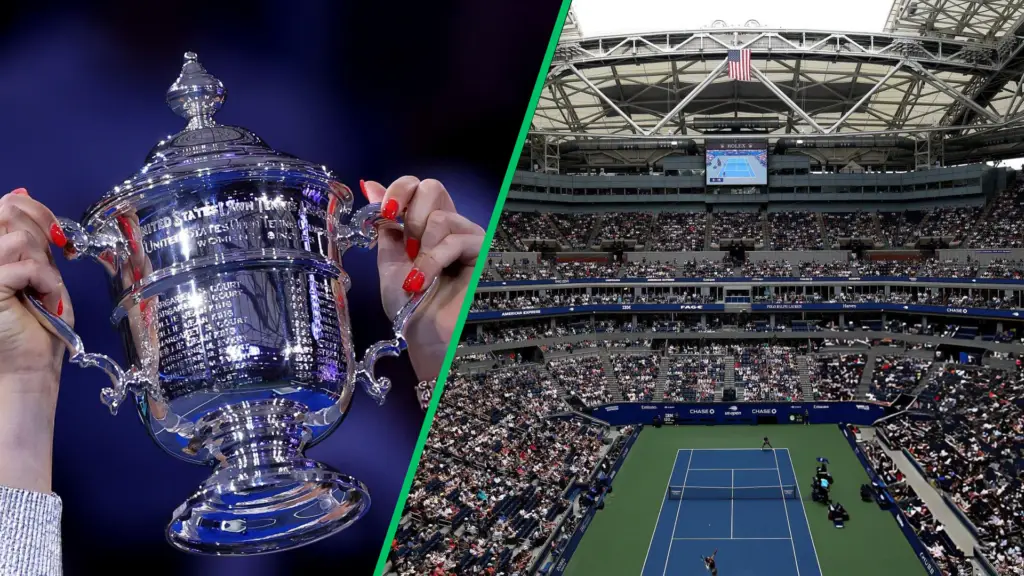
Every year the headline writes itself. The US Open announces a record purse, the players nod in approval, and the number gets repeated on broadcasts for two weeks. This year that number is $108 million, up 20 percent on 2025, with the men’s and women’s singles champions each collecting $5.5 million. It is the largest purse in Grand Slam history.
What rarely gets explained is where the money originates, who controls it, and why an organisation that is legally a non-profit can afford to hand a single athlete a cheque worth more than most sports franchises pay their entire rosters for a month. The answer says a lot about how tennis is structured, and why the sport’s biggest arguments are about revenue rather than results.
A Non-Profit That Runs a Half-Billion-Dollar Event
The US Open is owned and operated by the United States Tennis Association, the national governing body for the sport in America. The USTA is registered with the IRS as a not-for-profit business league rather than a charity, which surprises people who assume a tournament this commercial must sit inside a media conglomerate or a private equity portfolio. It does not. The USTA answers to a board and a membership, not to shareholders.
That distinction matters. A non-profit cannot distribute profit to owners, so everything the tournament earns has to go somewhere within the mission. In practice that means three destinations: paying the players, paying for the event itself, and funding tennis across the rest of the country. In 2024 the US Open generated around $560 million, roughly 90 percent of everything the USTA brought in, and turned a profit of about $277 million. The US Open is not a business that happens to fund a governing body. It is the governing body’s business, and almost its only one that matters financially.
Follow the money at the US Open
2024 revenue and spending are the latest published figures. Prize money is 2026.
Where the $560M goes
Key numbers, in millions of dollars
Sources: USTA, ATP Tour, Sportico, The Athletic via Yahoo Sports.
The Five Streams That Feed the Purse
Roughly 85 percent of US Open revenue comes from sponsorships, broadcasting rights, tickets, concessions and merchandise. Each of those streams behaves differently.
Ticketing is the single largest stream, and it is the one fans feel most directly. More than 1.1 million people passed through the gates last year, the highest attendance of any tennis event in the world. Premium seating, suites and hospitality packages make up a disproportionate share of that income, which is why so much of the ongoing $800 million renovation of the grounds is aimed at the top end of the market rather than the general admission crowd.
Broadcasting is the foundation. ESPN holds exclusive US rights under a 12 year agreement that runs through 2037, a deal reported to be worth around $2.04 billion across its lifetime. That contract is the reason the USTA can announce purses years in advance with confidence. Whatever happens at the gate, the television money arrives.
Sponsorship is the growth engine. Unlike Wimbledon, which keeps partner branding to a minimum, the US Open is defined by bold sponsorship activations and star-studded musical performances. The partner roster is priced on the tournament’s unique ability to reach a wealthy, urban, global audience in the middle of New York’s most valuable fortnight. The activations on site are not decoration. They are the product being sold.
Concessions and merchandise complete the picture. The most famous example is the Honey Deuce, a $23 cocktail that sold 738,459 units in 2025 and generated more than $17 million in a single tournament. One drink, sold at a premium, across three weeks, became a line item that most minor league sports teams would envy.
The Sixth Stream Nobody Talks About
There is one more source of income that is easy to miss because it has nothing to do with Flushing Meadows. The USTA collects membership dues from recreational players across the country. The organisation has more than 500,000 individual members and thousands of organisational members, and every club member, league participant and junior competitor who pays those dues contributes to the same balance sheet that funds the Open.
The amounts are small compared with a broadcast contract, but the direction of flow is what makes it interesting. Money moves from the grassroots up to the elite event, and then the surplus from the elite event moves back down. It is a closed loop, and it only works if the tournament at the top keeps growing.
Why the Number Keeps Rising
The purse did not jump by 20 percent because the USTA suddenly became generous. It rose because the players forced the issue. Over the past year the top men and women pushed all four Grand Slams over the share of revenue that reaches them, and at Roland Garros the top ten on both tours limited their media availability to an hour in protest. Their argument is simple: tennis players receive a far smaller slice of the money they generate than athletes in the major American leagues, where collective bargaining locks in something close to half of all revenue.
The US Open’s response was to move first and move big. Announcing the largest purse in history before the tournament began was a way to buy peace in New York and put pressure on the other three majors. It also arrived just weeks after Craig Tiley took over as chief executive of the USTA following a 21 year tenure at Tennis Australia, where he built a reputation for keeping players onside while growing the event’s revenue every year. The timing was not accidental.
Where the Rest of the Money Goes
Once players and operating costs are paid, the surplus is reinvested by the USTA into grassroots tennis infrastructure and community programmes. This is the part of the model that justifies the non-profit status and it is not trivial. The USTA has set a public target of 35 million American tennis players by 2035, up from 27.3 million today, and the Open is the mechanism that pays for that ambition.
So when a champion lifts the trophy and collects $5.5 million, that cheque is drawn from the same account that funds a public court resurfacing in Ohio and a junior programme in Texas. The elite and the amateur are financially the same enterprise.
My View
The US Open is the best argument in world sport for the governing body model, and also its biggest warning sign.
It is the best argument because the loop works. A single event generates enough money to pay athletes record sums, rebuild its own venue, and still fund the sport at every level below it. No private owner would tolerate that much money leaving the building. A non-profit is designed to let it leave.
It is a warning sign because the model has become dependent on one fortnight in Queens. If the players ever organise properly and win a fixed percentage of revenue, or if the broadcast market softens when the ESPN contract comes up for renewal, the USTA has very little else to fall back on. The record purse is being celebrated as a sign of strength. I read it as a sign that the players now understand exactly how much leverage they have, and that the USTA knows it too.
The interesting question for the next few years is not whether prize money keeps rising. It is whether the USTA can keep growing the top of the pyramid fast enough to keep funding the bottom of it, while paying the players a share that looks fair. That is a much harder balancing act than announcing a record number, and it is the real business story of this tournament.
Sources
- ATP Tour: 2026 US Open prize money
- Man of Many: US Open 2026 prize money revealed
- SportsPro: The business of the US Open 2026
- Tennis Companion: US Open prize money breakdown and historicals
- Sportico: 2025 US Open Honey Deuce sales and USTA financials
- Sportico: 2024 US Open Honey Deuce revenue
- Yahoo Sports: ESPN extends US Open rights through 2037
- Charity Navigator: United States Tennis Association profile
- GuideStar: United States Tennis Association profile